
Education
Monkey See, Monkey Do
What if the greatest lessons our children are learning are not from the classroom, but from us? What if the values they carry into adulthood are shaped less by our instructions and more by our actions?
By OBAHOR AGHOGHO
•
July 11, 2026
•
3 min read
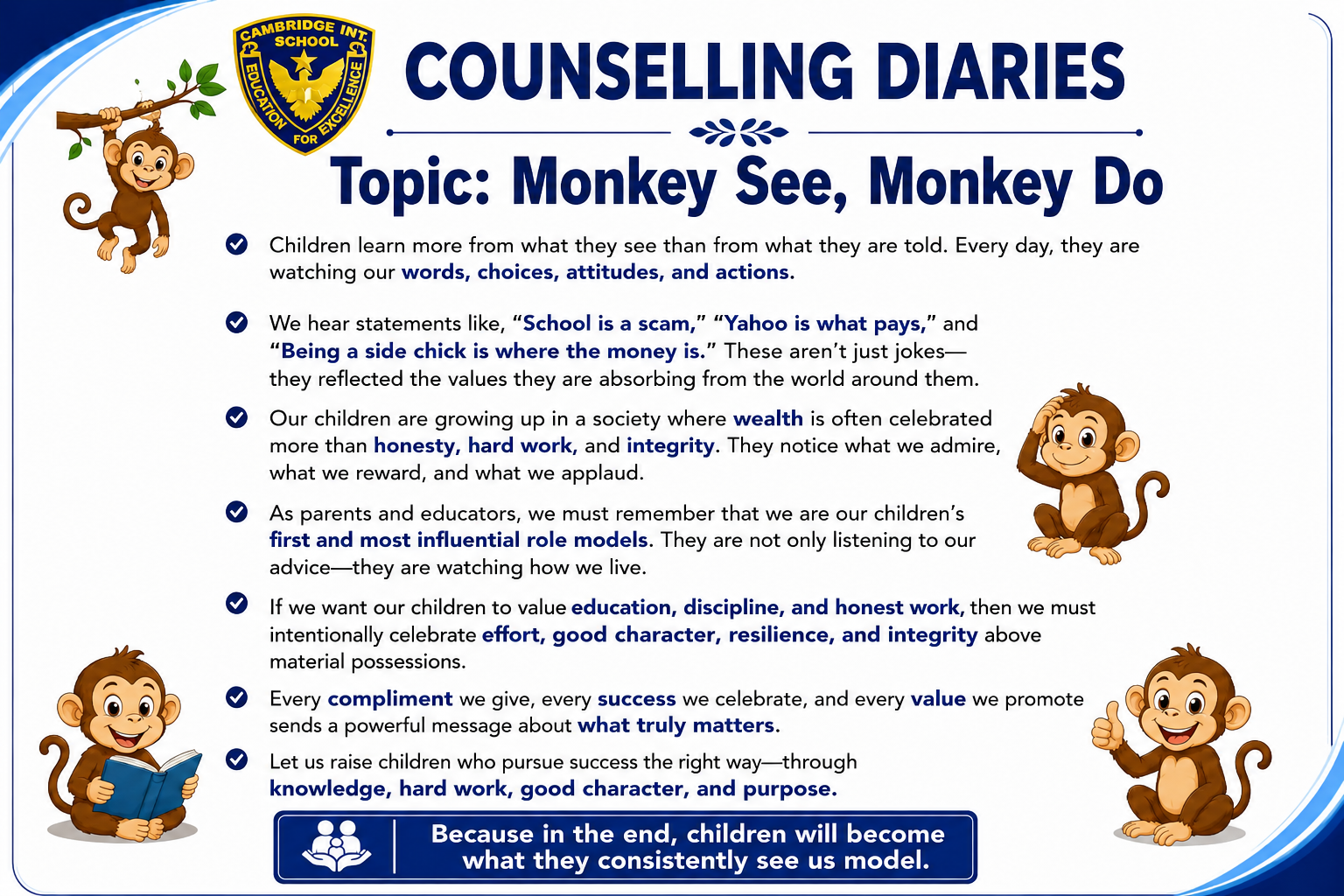
The phrase "monkey see, monkey do" may sound simplistic, but it captures a profound truth about human behaviour: children are natural imitators. They watch what we celebrate, what we prioritize, what we tolerate, and what we reward. Whether we realize it or not, we are constantly teaching them what success, character, and purpose truly mean.
A recent conversation with some learners left me genuinely concerned and convinced that this is an issue deserving our collective attention.
During my discussion with them, I heard statements such as, "School is a scam," "Yahoo is what pays," and "It's better to become a side chick because that's where the money is." What troubled me most was not just what they said, but the confidence with which they said it.
These were not merely careless remarks. They were reflections of a generation absorbing the values, attitudes, and priorities they encounter daily, both at home and within the wider society.
The unfortunate reality is that we now live in a society where academic excellence, integrity, and hard work often receive little recognition, while wealth and luxury are celebrated with little regard for how they were acquired. Expensive cars, designer clothes, the latest iPhones, and lavish lifestyles are frequently admired more than honesty, discipline, and genuine achievement.
Learners at Cambridge International School are not only watching their educators; they are also watching their parents. They observe what we celebrate, what we applaud, and what we give our attention to. More often than not, they imitate our actions more than they follow our instructions.
If Cambridge international School learner's grow up believing that money is the only measure of success, regardless of how it is obtained, they may gradually lose interest in education, character, and honest labour. This is a future none of us desires for them.
As parents and educators, we must intentionally return to the drawing board. Let us celebrate effort, commend integrity, reward good character, and remind our children that lasting success is built on knowledge, discipline, resilience, and honest work.
The values we model today will shape the adults our children become tomorrow. Every celebration, every conversation, and every choice we make sends a message about what truly matters in life.
If we continue to celebrate wealth without questioning its source, applaud success without considering the sacrifices behind it, and prioritize material possessions over character, we should not be surprised when our children adopt the same values. The next generation is not being shaped merely by what we teach in classrooms or preach at home; it is being shaped by what we consistently reward and admire.
Together, let us raise a generation that not only seeks success, but also values character, purpose, integrity, and honest labour. For, in the end, the greatest inheritance we can leave our children is not wealth, status, or luxury, but the wisdom to distinguish between what is merely attractive and what is truly valuable.
After all, children learn less from what we tell them and far more from what they see us do.
Aghogho Obahor
Guidance Counsellor.